3D Warehouse Optimizer
An interactive 3D voxel-based warehouse modeling tool for planning rack layouts, calculating space utilization, and estimating rental costs in real time.
The problem
Warehouse space planning was happening on paper. Literally. Someone would sketch a floor plan, estimate how many racks could fit, and then discover during installation that they'd miscalculated clearances or blocked a fire exit. The exact warehouse dimensions were known, but translating those numbers into an optimal layout required trial and error that cost real money every time a rack had to be repositioned. There was also no quick way to calculate how much rentable space a given configuration would yield or what it would cost tenants per cubic meter.
The approach
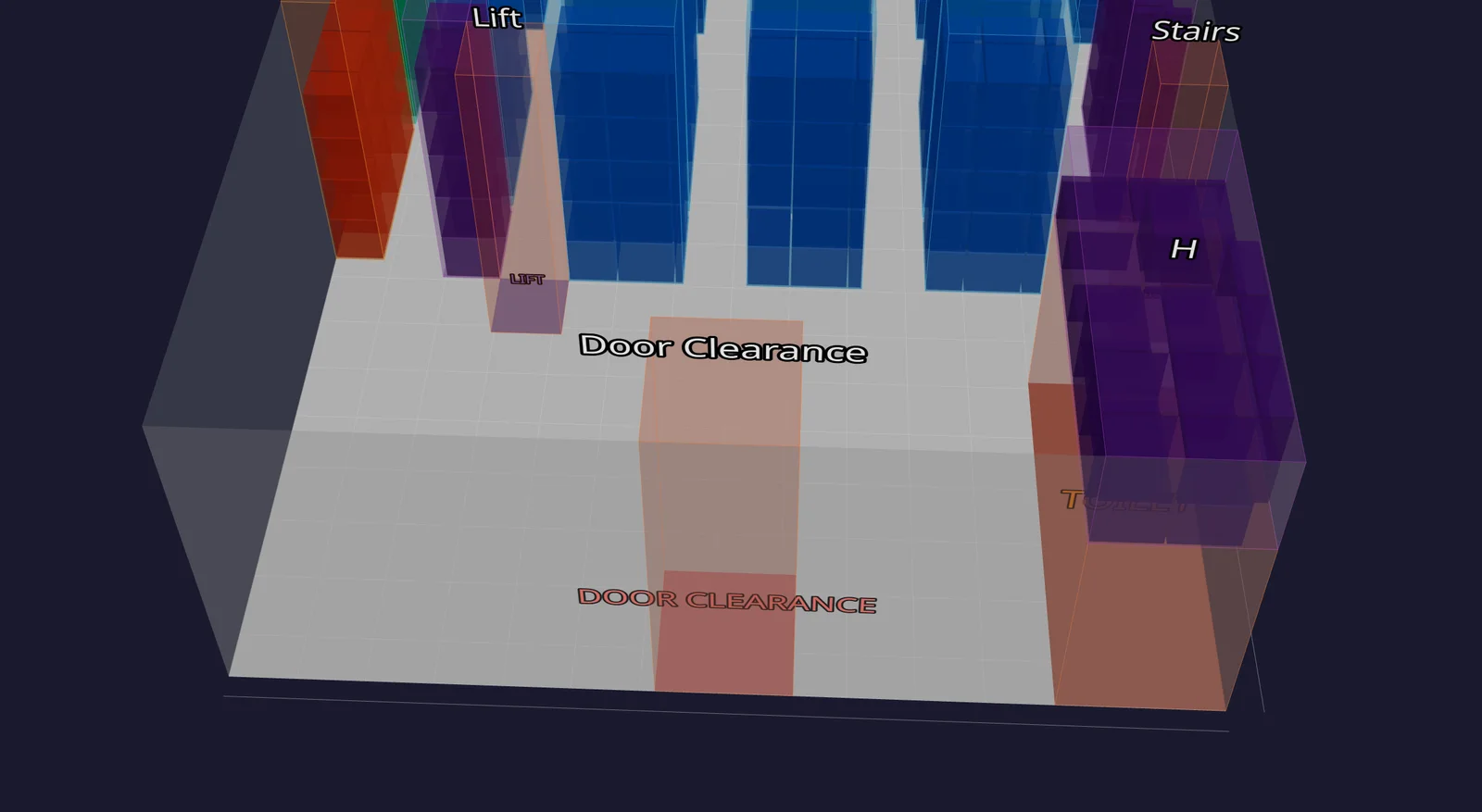
I built a browser-based 3D tool that lets you model the warehouse layout interactively. Place voxels, assign zones, switch between camera angles, and watch the metrics update live. No installation, no CAD software, no learning curve.
- Built with React 19, Vite, and TypeScript for a fast, type-safe development experience with instant hot reloading during iteration
- Used Three.js through React Three Fiber for declarative 3D rendering, making the scene composable and easy to extend with new features
- Implemented two camera modes: an axonometric view for precise top-down planning and a perspective view with orbit controls for walking through the space visually
- Created a voxel placement system with multi-color coding and 8 distinct rack zones so each area of the warehouse maps to a logical storage section
- Built live metrics that update on every interaction: total volume, occupied volume, rentable volume, placed volume, utilization percentage, and a dynamic rental cost calculator
- Added JSON import and export so layouts can be saved, shared with stakeholders, and loaded back for further editing
- Managed all application state through Zustand, keeping the 3D scene and UI panels perfectly in sync without prop drilling or unnecessary re-renders
The outcome
What used to take a full day of back and forth between operations and facilities now takes about twenty minutes. Someone can model three different layout options, compare their utilization percentages, and send the JSON files to the team before lunch. The rental cost calculator turned out to be unexpectedly useful for the sales side too. They could show prospective tenants exactly how much space they'd get and what it would cost, right there in the browser during a meeting. The tool paid for itself the first time it caught a layout that would have blocked forklift access to two zones.
What I learned
3D in the browser is more capable than most people expect, but performance requires discipline. Every voxel is a draw call if you're not careful, so I learned to batch geometry and use instanced meshes early. Zustand was the right call for state management here because the state shape was complex (camera mode, selected zone, voxel grid, metrics) but the access patterns were predictable. I also learned that giving non-technical users two camera modes isn't a luxury. Some people think spatially in orthographic and others need perspective. Offering both meant everyone could actually use the tool without training.